
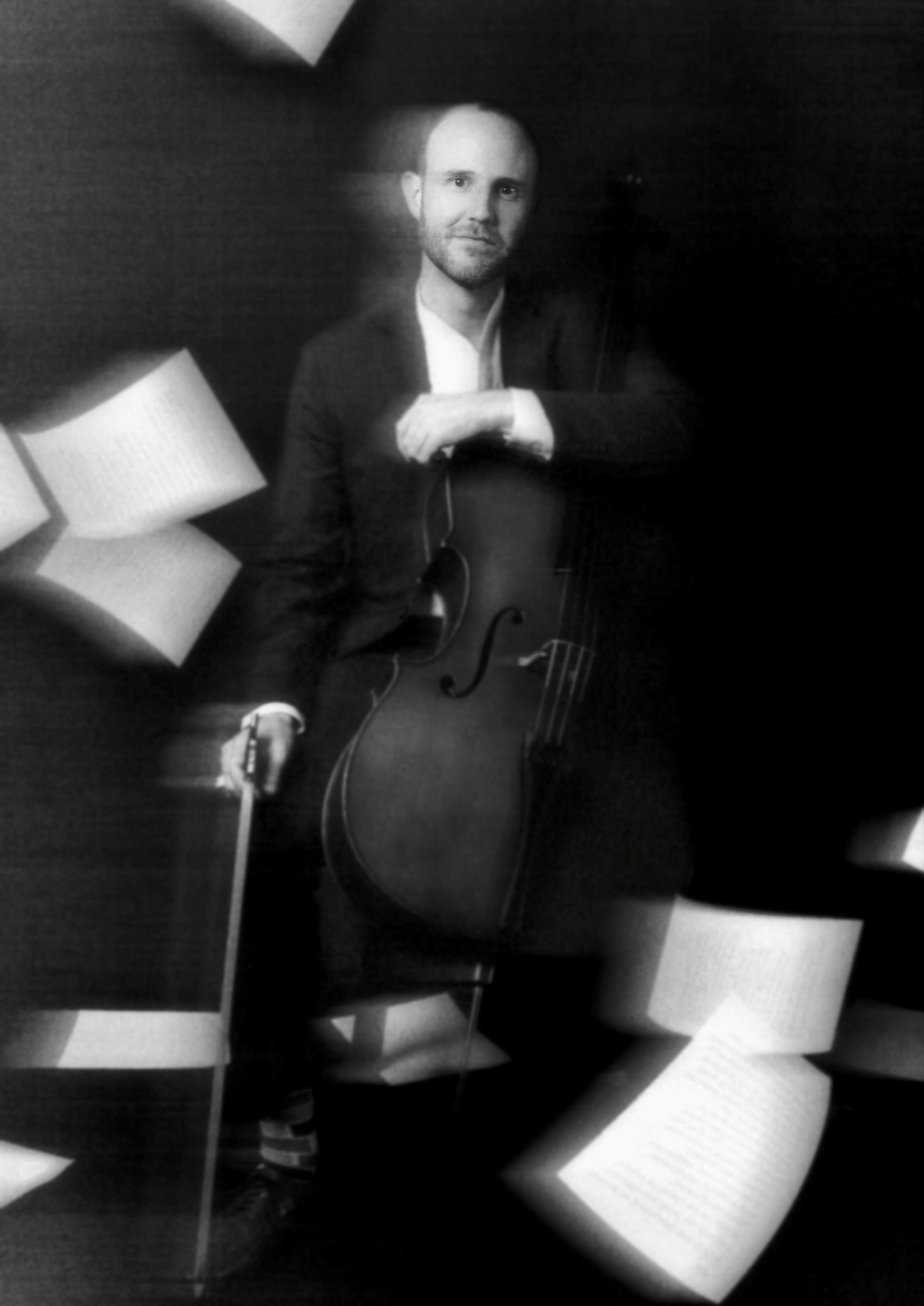
BIOGRAPHY
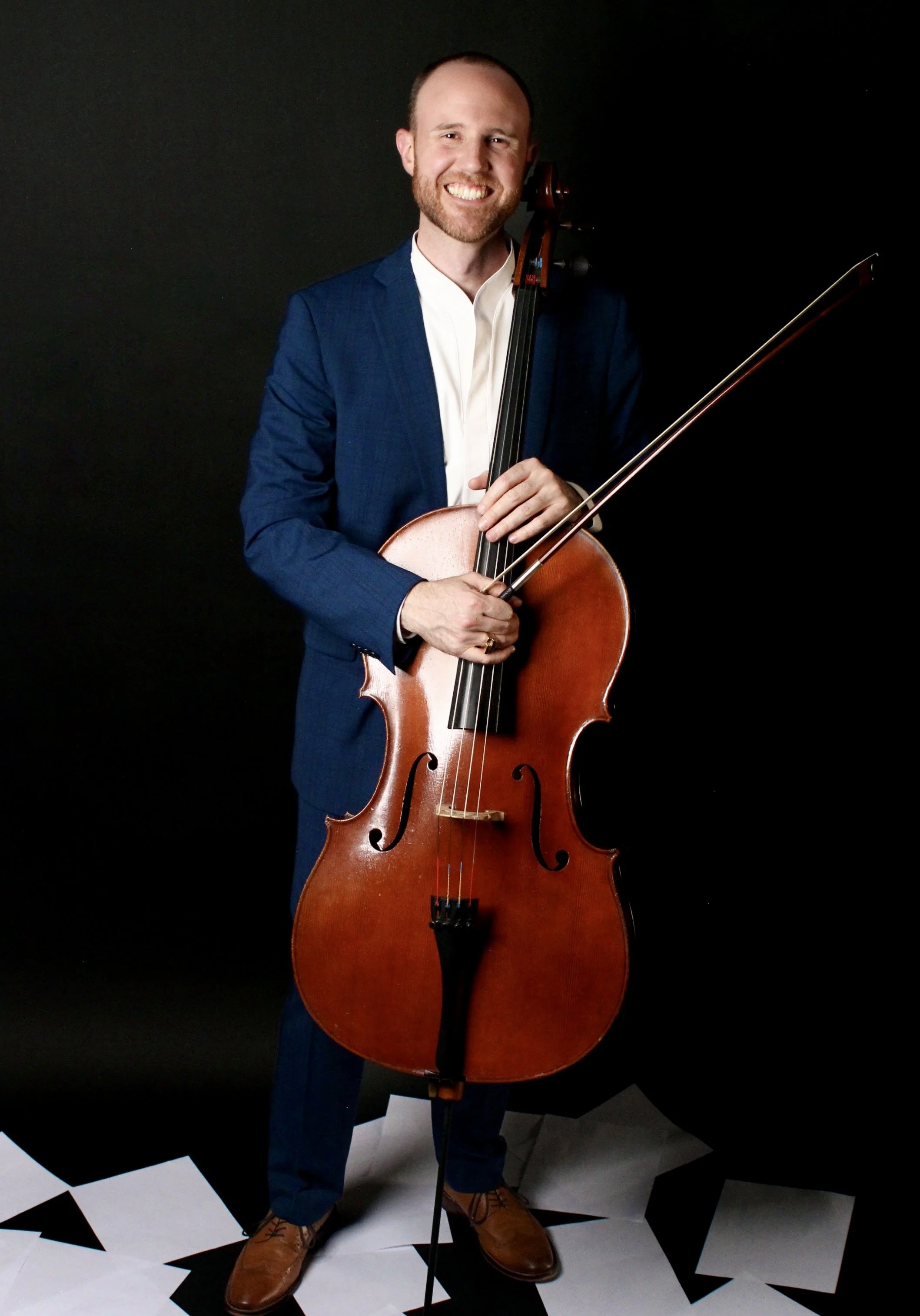
Praised for his "assured confidence, great flexibility, and innate musicianship" (Fanfare Magazine), cellist Bryan Hayslett continues to distinguish himself as a versatile solo, chamber, and orchestral player. Dr. Hayslett is currently Assistant Professor of Cello and Academic Studies at Middle Tennessee State University, where he is also the Program Coordinator for the Music Industry program and the Artistic Director of the Stones River Chamber Players. In the summer, he serves on the faculty of the Tennessee Governor’s School for the Arts. He made his Carnegie Hall debut in 2009 as first prize winner of the Alexander & Buono International String Competition and returned the following year as a repeat top prize laureate.
Dr. Hayslett has performed in venues including Carnegie Hall, Jordan Hall, Boston’s Symphony Hall, Philadelphia’s Academy of Music, NYC’s Metropolitan Museum of Art, Kneisel Hall, Detroit Institute of Art, and internationally in the Cayman Islands, Anguilla, Canada, the UK, and China. In addition to performing concertos with the University of Wisconsin Madison Wind Ensemble, New World School of the Arts Symphony Orchestra, the Boston Conservatory Lab Orchestra, Dr. Hayslett has performed with groups including Eighth Blackbird, Palm Beach Opera, the New York Arabic Orchestra, Ne(x)tworks, Experiments in Opera, and Sound Icon. He has collaborated with artists including Joseph Silverstein, David Kim, Natasha Brofsky, Colin Carr, and Lauren Flanigan, and has been artistic faculty at festivals including the Killington Music Festival and the Fox River Chamber Festival. In the recording studio, he was a member of the East Coast Scoring Orchestra and has recorded for organizations including Netflix Japan. Beyond classical music, he has performed with artists such as Flo Rida and jazz singer Sara Serpa.
Dr. Hayslett is a proponent of new music, and his album Cello Unlocked explores connections between music and language, including several tracks with him singing and playing, and was released in 2024 to critical acclaim across the globe. Having founded and participated in Juxtatonal, Semiosis Quartet, and several other new music chamber groups across the New England area, he has commissioned composers including Joan La Barbara, Amy Beth Kirsten, Mary Kouyoumdjian, Anthony R. Green, David Macbride, and Annika Socolofsky. Additionally, he has worked with composers such as Louis Andriessen, Joan Tower, Evan Ziporyn, Ted Hearne, and Yehudi Wyner. Dr. Hayslett can also be heard on an Innova recording, "A Special Light," featuring music of David Macbride.
As Executive Director of Bow and Bridge Society, a 501(c)3 nonprofit he founded, Dr. Hayslett supports and promotes string music through high-quality performance and learning opportunities, fostering an inclusive musical community worldwide. The organization is working to encourage the next generation of string players to think creatively and collaboratively by providing access to high-caliber experiences in a cooperative environment. He has run community strings events in the Cayman Islands, Dallas TX, Miami FL, and Murfreesboro TN.
As a scholar, Dr. Hayslett's Theory of Prominence, published by Cambridge University Press, suggests that listeners perceive rhythm in contemporary music in similar ways to how they perceive the rhythm of language. His focus on temporality in and perception of contemporary music was inspired by his study and performance of Lee Hyla's music. He has received several research grants and has presented his research at conferences across the United States and in Austria, Norway, and Portugal.
With degrees from NYU (Ph.D.), The Boston Conservatory (M.M., G.P.D.), and The Hartt School of Music (B.M.), Dr. Hayslett’s principal teachers include Marion Feldman, Rhonda Rider, Terry King, and Yuri Anshelevich. Previously, he was the cello professor at New World School of the Arts, and before that he taught cello and music history as adjunct artist faculty at NYU Steinhardt. Dr. Hayslett performs on an American cello made by Gary Davis in 1998.
Beyond music, Dr. Hayslett competes in triathlons, cooks, and enjoys woodworking.
SHORT BIOGRAPHY
Praised for his "assured confidence, great flexibility, and innate musicianship" (Fanfare Magazine), cellist Bryan Hayslett teaches as Assistant Professor of Cello and Academic Studies at Middle Tennessee State University, where he is also the Program Coordinator for the Music Industry program and the Artistic Director of the Stones River Chamber Players. In the summers, he serves on the faculty of the Tennessee Governor’s School for the Arts. Dr. Hayslett has performed in venues including Carnegie Hall, Jordan Hall, Boston’s Symphony Hall, Philadelphia’s Academy of Music, NYC’s Metropolitan Museum of Art, Kneisel Hall, Detroit Institute of Art, and internationally in the Cayman Islands, Anguilla, Canada, the UK, and China. He champions music of all time periods, especially new music, frequently working with and commissioning living composers such as Joan La Barbara, Amy Beth Kirsten, and Anthony R. Green. He has performed with groups including Eighth Blackbird, Palm Beach Opera, New York Arabic Orchestra, East Coast Scoring Orchestra, and Sound Icon, and he holds degrees from NYU, The Hartt School of Music, and The Boston Conservatory. His album Cello Unlocked was released in 2024 to critical acclaim across the globe and explores connections between music and language, including several tracks with him singing and playing. He has led community string events across the USA and in the Cayman Islands, and his nonprofit Bow and Bridge Society promotes string music through high-quality performance and learning opportunities, inspiring string players to grow creatively and collaboratively. Outside classical music, he has performed with artists such as Flo Rida and undertaken entrepreneurial endeavors including performing live music for yoga classes. As a scholar, Dr. Hayslett's Theory of Prominence, published by Cambridge University Press, suggests that listeners perceive rhythm in contemporary music in similar ways to how they perceive the rhythm of language. He has presented his research at conferences across the United States and in Austria, Norway, and Portugal. Dr. Hayslett performs on an American cello made by Gary Davis in 1998. Beyond music, he competes in triathlons and enjoys woodworking.